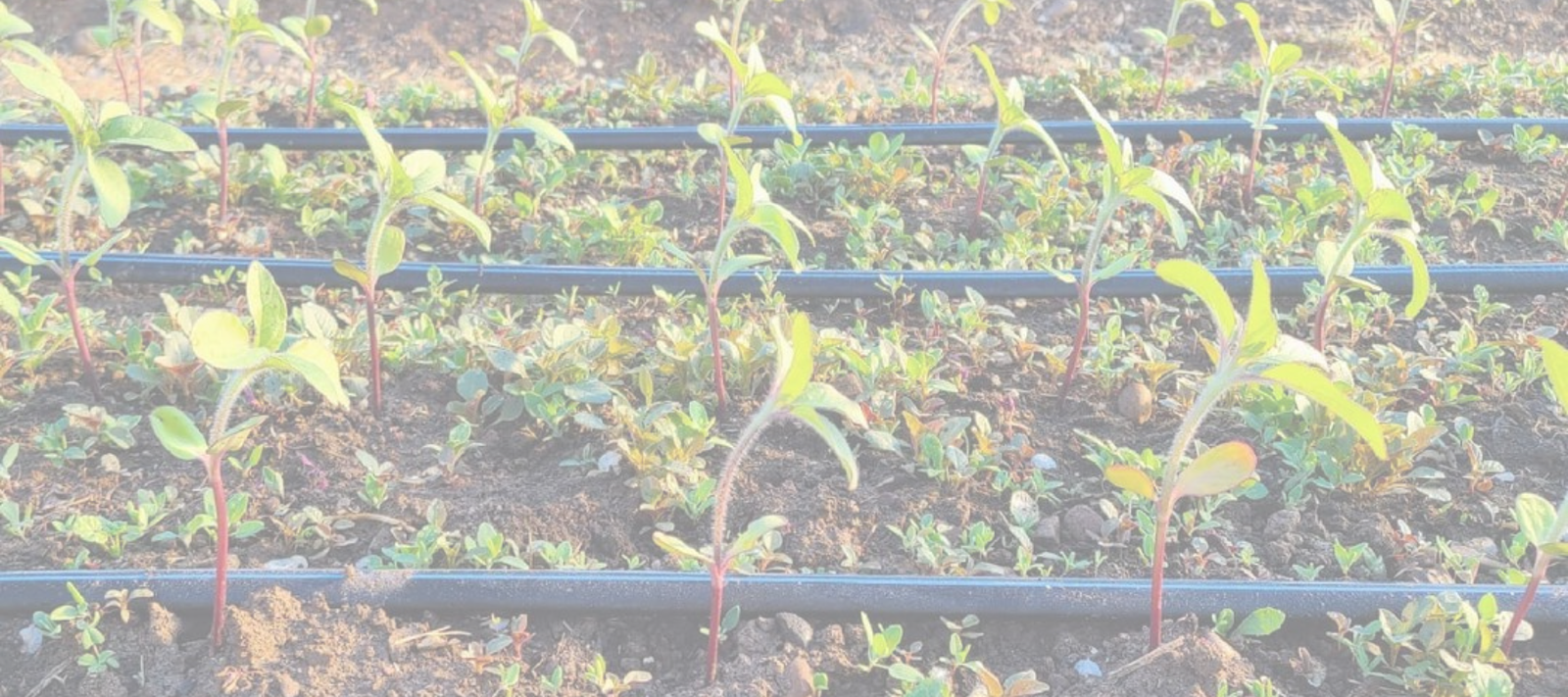











A protective fleece for plants! A cover for your rows! Germination improves, with a barrier between the sun, and moist ground. This permeable woven technology prevents bugs from temporarily attacking vulnerable seedlings upon emergence. A blanket for cold nights, a frost blanket, or a frost cloth, thermally insulates radiant ground heat, trapping it near the plant canopy. It is primarily used in late summer, through winter, and the cold snaps of spring. Preventing holes and leaf damage from migrating insects is an additional bonus! Vegetable plants like peas, eggplant; especially turnips and radish can use a little relief from pestering swarms of the dreaded moths, root maggot flies, and beetles that emerge, hopping leaf to leaf. So now we know the contributions this farm tool helps with on the farm, we can discuss the types, and timing required for using frost blanket row cover effectively each season.
Spring seedlings and transplants can use a little extra care with a thermal fleece plant cover. Spending all that time growing seeds in cell, and pot containers to get an early, fuller growth outcome may utilize added protection that spun poly fiber blankets contribute. Start plants early in large size propagation trays. 50-cell vented, and 72 cells are most common, accommodating a wide range of species and varieties for the home garden, including lettuce! Choosing a propagation tray that is shallow, so that the seedling can attain as much heat as possible from a heating mat is critical to prevent damping off. Propagation trays filled with emerging seedlings only need a humidity dome for a couple of days for proper germination. Take the humidity dome off after the second or third watering to further prevent ‘damping off’ where the seedling develops fungal infection from too much moisture, heat, and cold air. Once seedling trays are growing nicely, with uniform sized plants, timing is everything. Pair your planting schedule, with using frost preventative blankets, the day you set transplants outside in the garden. Knowing your bed size can speed up the process of planting plants, and covering with row cover and weights for a few days. A general rule of thumb for knowing when frost occur is to cover plants when night time temperatures are either below 38*, or any day and night when temperatures range from 54* F to 38* and below. Significant cloud cover at night and emerging morning sun prevent frost from forming, however, the frost cloth prevents temperature swings, reducing chances of damping off, and temperature stresses greater than five degrees.
Wide sizes are available. My personal preference is twelve feet widths, as it stretches over larger plants, later in the year, when it’s really windy, requiring less weights, beams, rocks, and blocks, or sandbags with rocks, than a 6’ width would. The different weights do help with the cold to a degree. Heavy weight ‘1.25’ and ‘.09’ offer more strength when dealing out weights to hold the fabric in place, as both are more resilient from tearing in freezing temperatures. The light weight fabric works very well inside a greenhouse, allowing lighter and airflow. Storing lightweight fabrics easily is a consideration, but heavy weight versions fold nicely compared to the ‘.06’ types.
I recently planted eggplant, on a 50’ row, where eggplant is spaced every two feet, in two rows on a 30” bed spacing. This planting took roughly 46-48 plants. A 6’ X 50’ row cover easily unfolds over almost 1’ foot tall plants, popped out of a 38-star propagation tree tube tray. I use various rocks, pipes, and sticks to hold down a frost blanket against the base of each eggplant stem. Timbers also help a lot, because I can roll it on the edge, taking up 3’ to 6’ of a frost blanket, preventing wind from getting in, and ripping it off on a stormy night. This being Blackberry Winter, I may leave it on for about a week, regardless of rain or sun. Utilizing sandbags filled with rocks, and timbers seem to help me keep the blankets down, in spite of strong winter, and spring winds against my back.
With my 12’ X 50’ long frost blanket, I will be covering multiple rows of tomato, broccoli, and potato all at once, with less walking, and weight placement along the entire outer edge of the frost blanket. I tend to avoid using wire support when plants are strong enough to support the fabric, as it saves time, since I’ll be removing the fabric before a heavy rain fall, or on a sunny, warm week in the month of May. But using galvanized, ‘coiled steel wire’ helps lift the frost blanket uniformly, and symmetrically off the seedlings. This may result in better quality plants, depending on their size and the time of year, wire hoops can improve the frost blanket effectiveness. In case of rain, snow, sleet or freezing wind, giving your plant rows a frame for the frost blanket to push against improves the survival rate in inclement, and dangerous weather. Wet frost blanket holds heat significantly more than a dry one would; but leaves touching the wet frost blanket may freeze. Turnips, radish, and Asian greens, susceptible to bug damage early after sowing, seem to not mind the fabric at all. As you water the fabric on the germinated bed, you can watch the plants grow significantly faster, raising the fabric to bulge up ready for harvest. Take into account the size of your plants, time of year, and harvest goals when you design your winter garden.
Old worn out and mud-stained frost blanket get further repurposed for animal prevention, and a sun screen for seedlings. Germination improves when you use an old frost blanket, especially for summer carrots! Water permeates fabric, and evenly soaks the ground, when you need to leave the cover on your bed on those dry spring or summer weeks. A real trick to Fall and winter gardening is having your plants out of their trays, and into the ground well before October. Autumn Equinox is a particularly important time to have your seedlings watered in, large, and acceptable to soak up that fall sunlight. Smaller plants, even with frost blanket do not seem to grow rapidly if planted any later. This is because of the time period known as Persephone period, where we gradually lose daylight hours, and increase the chance of cold weather stunting, and stalling plant growth. Frost blanket at this stage of the year is used for preventative, and preserving qualities. Keeping cold air, bugs and animals off your plants so to can reap a harvest during the holidays. Persephone is the Greek goddess of spring, who transitions as goddess of the underworld. In context of your seasonal garden, the lush vegetive growth of spring and summer, completely stop growing at a rapid rate, and only grow when the weather is mild, and the sun, and moisture are adequate. Because of low day light hours between December, and Valentine’s Day, which seems to be most dreadful, your frost-free fabric turns into a shield, and refrigerator door! As all I can do is harvest crops, I began before October, and preserve with a frost blanket, until harvest. You need mature plants before October. The beginning of Winter solstice, frost blankets tend to remain on my plants until they die. After rest and relaxation, I contemplate the next attempt at a garden. I begin the seasonal cycle of production all over again! Waking out of my winter slumber bummer, and starting trays of seedlings! I plan to put them all out, in spite of the late winter weather. I will use all my available frost blankets, keeping the plants alive, hoping again for a late harvest, and an early one at best.