











Why You Need to Prep Your Greenhouse for Winter
Greenhouses are a great way to extend your growing season—or even grow year-round—but winter weather can be tough on greenhouse structures. Ice, snow, and extreme cold can cause serious damage if your greenhouse isn’t properly prepared.
With a few proactive steps, you can protect your investment and keep your greenhouse safe and functional through the colder months. Below are some practical, proven ways to prepare your greenhouse for winter before severe weather hits.
Heating Your Greenhouse
Heating is one of the most effective ways to protect your greenhouse during winter. A warm greenhouse helps snow melt as it lands on the structure, reducing dangerous snow loads.
There are several heating options available, including:
- Natural gas heaters
- Propane heaters
- Electric heaters
- Wood-burning heaters
We offer propane and natural gas heaters specifically designed for greenhouse use. Kerosene or diesel “torpedo” heaters can also be used, but proper ventilation is critical. All gas and wood-burning heaters must be vented correctly for safety.
We highly recommend heating your greenhouse during the colder months as your first line of defense against snow and ice damage.
Removing Snow and Ice
Snow load is one of the biggest risks to greenhouse structures in winter. Most greenhouse manufacturers recommend removing snow once it reaches about 8 inches. However, because snow and ice weight can vary depending on moisture content, we recommend acting sooner.
If you receive:
- 4 inches or more of snow, or
- ½ inch of ice
Snow and ice should be removed immediately.
To safely remove snow, use large push brooms with extended poles. From inside the greenhouse, gently tap the film upward—starting in the center and working toward the sides—until most or all of the snow and ice has fallen away.


Important tips:
- Do not hit the film too hard to avoid punctures
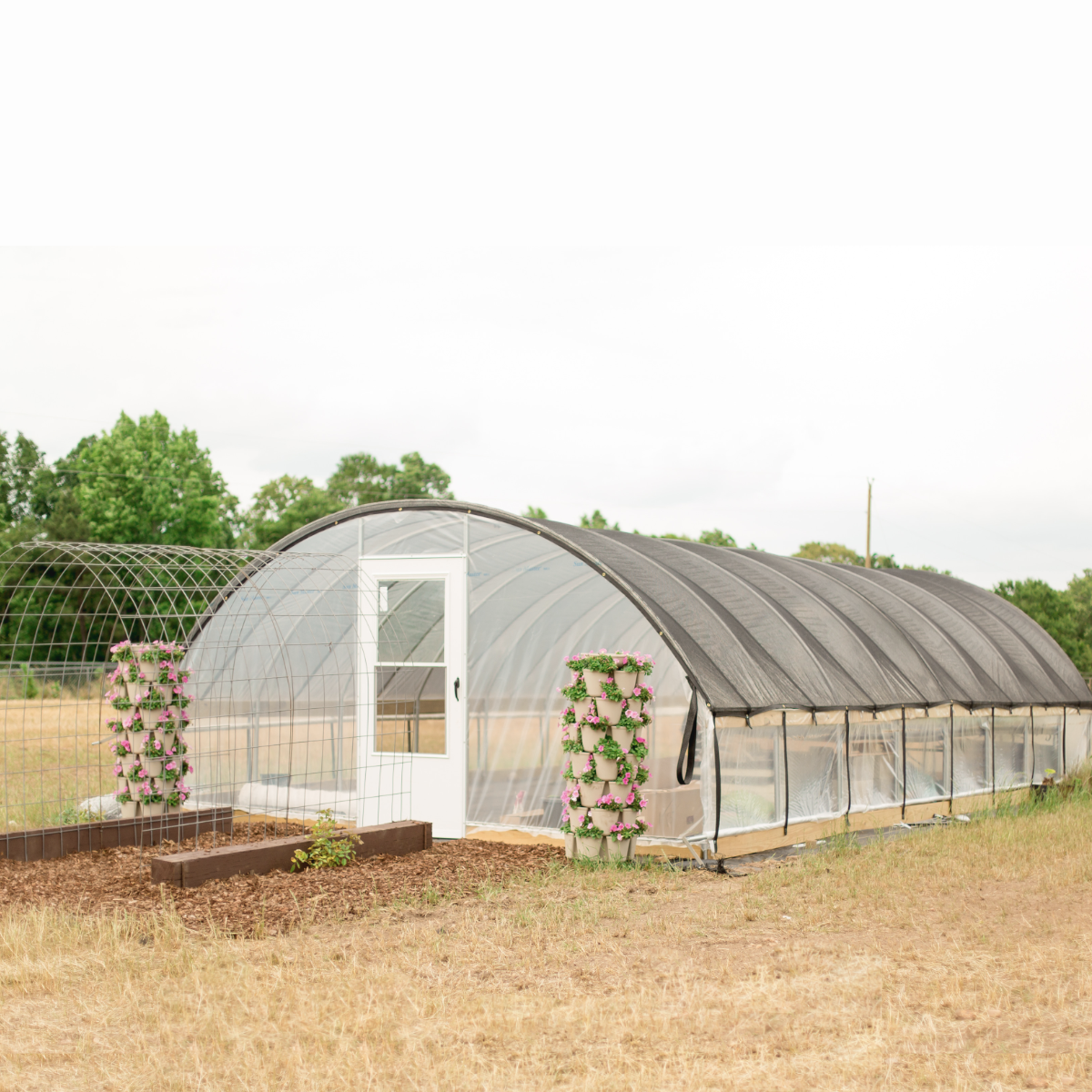
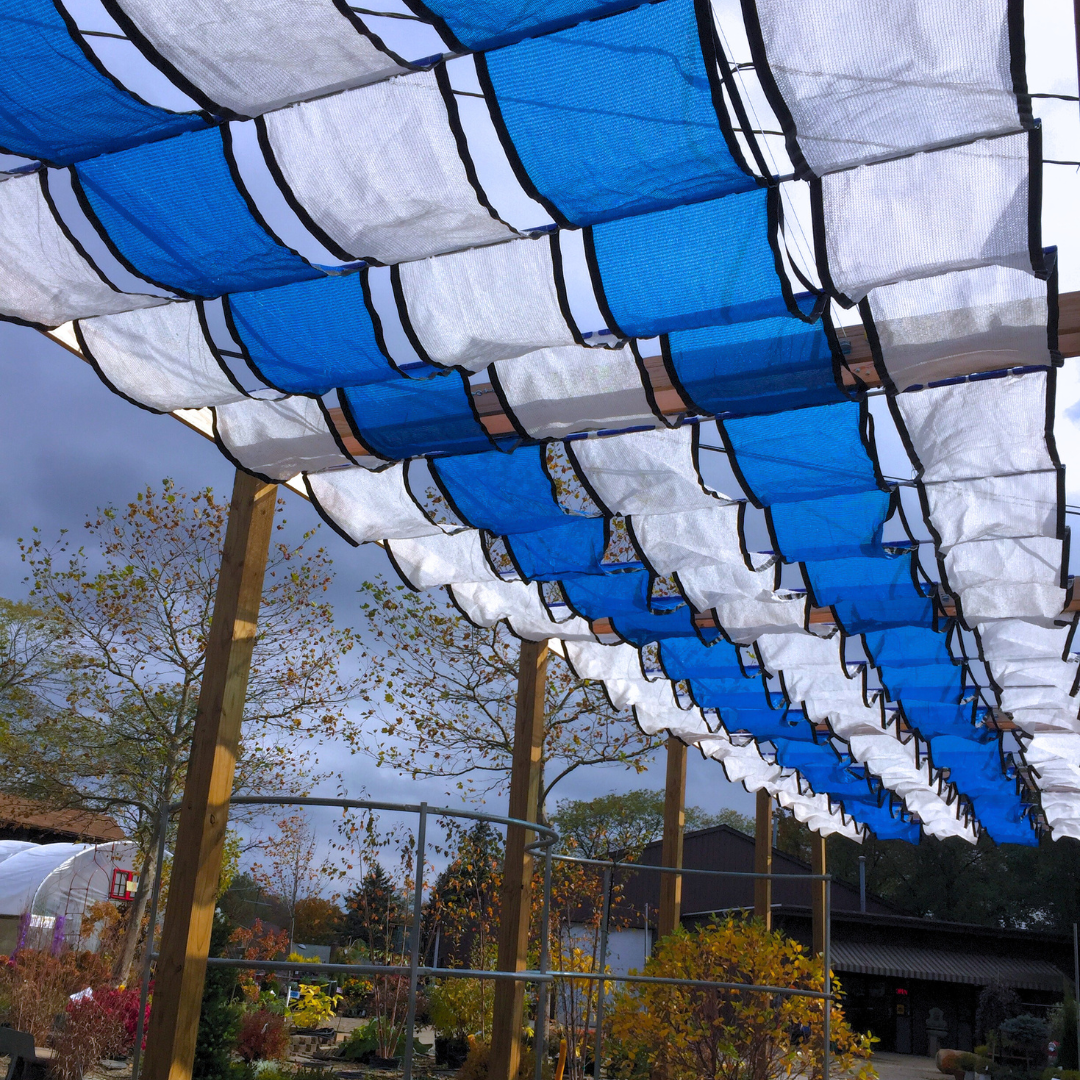
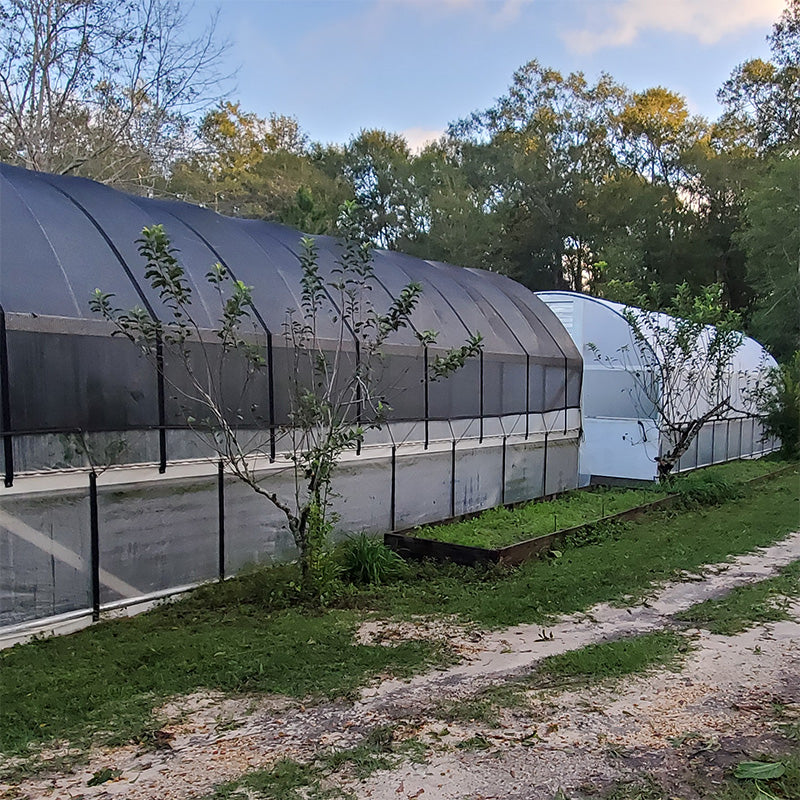
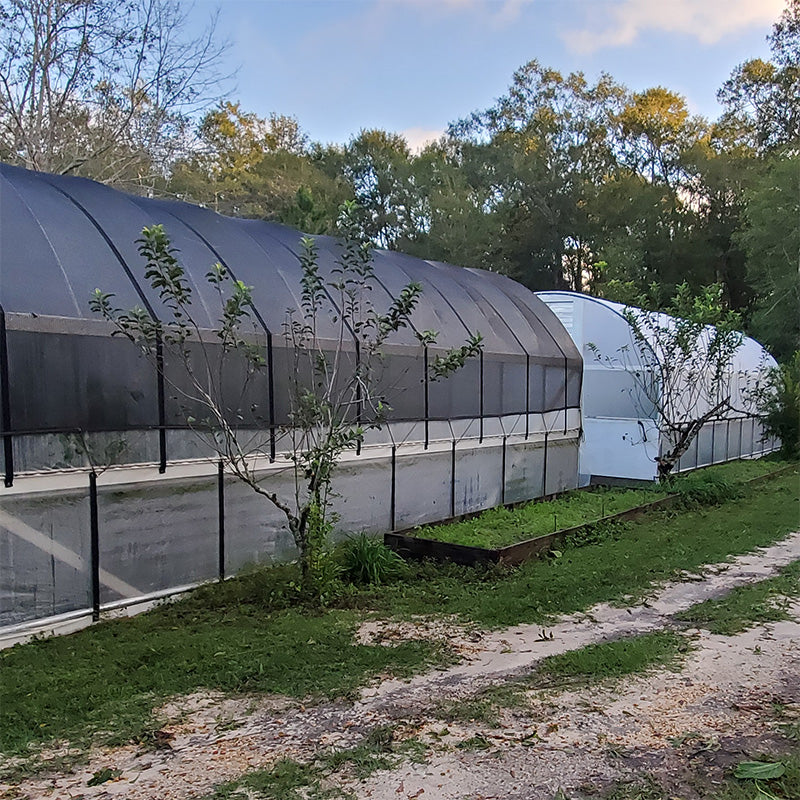
- Remove shade cloth before winter—wet shade cloth becomes extremely heavy
- Monitor your greenhouse during overnight snowstorms, as most damage occurs overnight
In heavy winter conditions, heaters and bracing are strongly recommended.
Removing the Greenhouse Film
If you are not using your greenhouse during snowy or icy weather, one option is to remove the greenhouse film entirely. This eliminates the risk of snow and ice damage to the structure.
While this may not be the easiest solution, it works well for smaller greenhouses that are not in use during the winter months.
Greenhouse Bracing
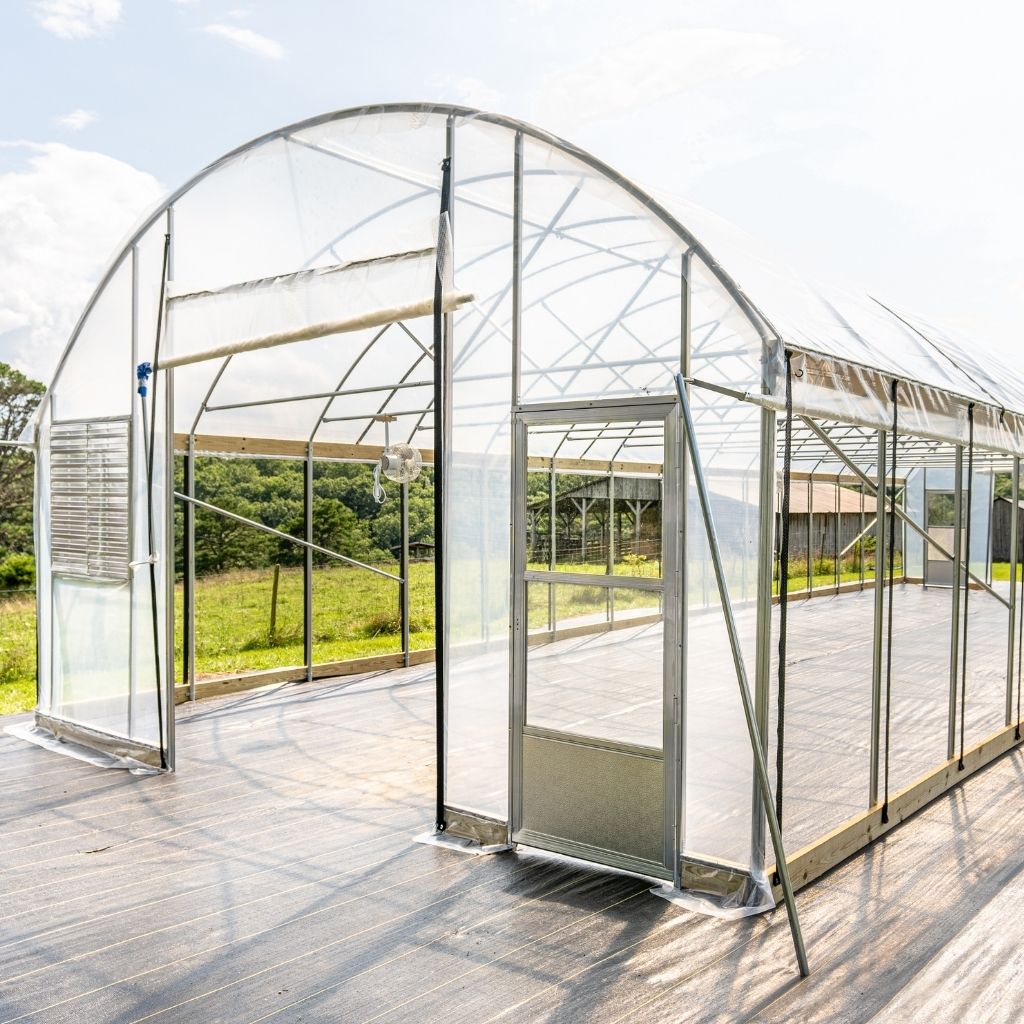
Adding internal bracing can significantly strengthen your greenhouse and protect it from higher snow loads.
We recommend using wooden 2x4 or 4x4 posts placed at least every three bows inside the greenhouse.
How to brace your greenhouse:
- Place a concrete cap block on the ground at each brace location
- Cut a “V” notch at the top of the post
- Fit the notch securely at the purlin/bow intersection
- Cut the brace to fit tightly between the ground and the bow
- Add a concrete paver at the base to prevent sinking
This method substantially strengthens the structure and helps prevent collapse in heavy snow areas. Regions with higher snowfall may require closer bracing but we recommend adding the braces every 2-3 bows.
Once winter storms have passed, the bracing can be removed.


Prepare Before Winter Hits
The best time to prepare your greenhouse for winter is before severe weather arrives. Taking preventative steps now can help you avoid costly repairs, lost crops, and structural damage later.
If you have questions about heaters, bracing materials, or winter greenhouse care, we’re happy to help—just reach out!